
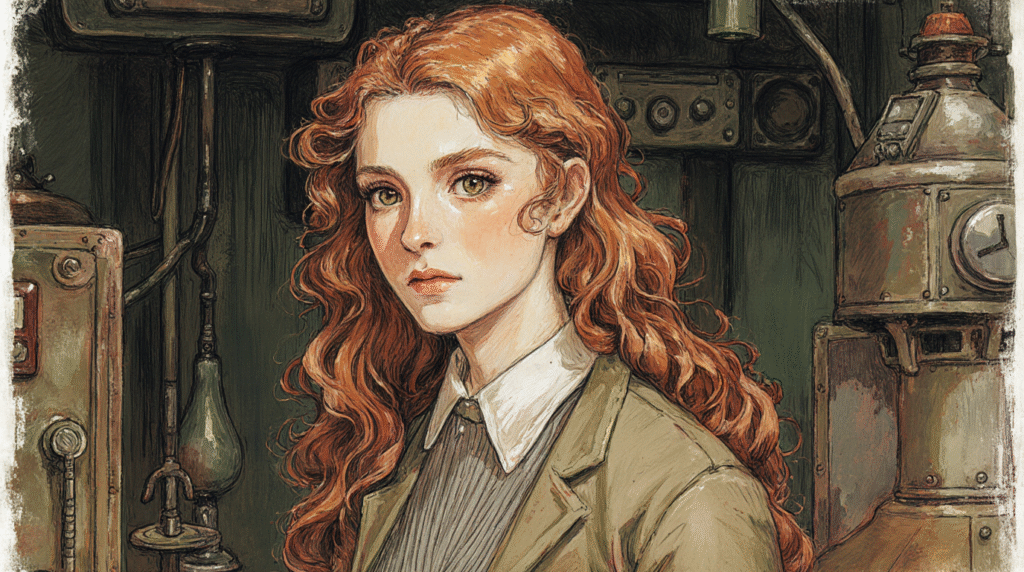
Meet Miriam Whitmere. Twenty-two years old, copper hair, olive-green eyes, always slightly out of focus in group photographs. The kind of person you’d walk past in the Sunset Centre corridors without noticing.
That would be a mistake.
Miriam is junior researcher on the Mneme project, working alongside the Thorne brothers. While Abel commands attention and Cain retreats into brooding genius, she operates in the spaces between – cataloguing, connecting, quietly solving problems no one else has noticed yet.
Her surname Whitmere means “white lake” or “clear peace.” Fitting for someone who reflects others more clearly than they see themselves. She has the particular insight that comes from a lifetime of observation rather than participation.
In alternative 1925, being a woman in science means fighting for space in a man’s world. Being naturally quiet in a world that rewards volume makes things harder. But Miriam possesses something neither Thorne brother has: the ability to see patterns in human behaviour that pure intellect misses.
She keeps detailed notebooks. Not just research notes – observations about people, their motivations, their blind spots. Someone who notices everything tends to understand the gap between what people say and what they mean.
The biblical Miriam was a protector, watching over her brother Moses. My Miriam watches too. But what happens when the observer decides to step out of the shadows?
Art of Oblivion explores what occurs when the person holding everything together finally lets go.
Coming February. Sometimes the quietest voice carries the most dangerous truths.
Daria Ryzhikova Writer