
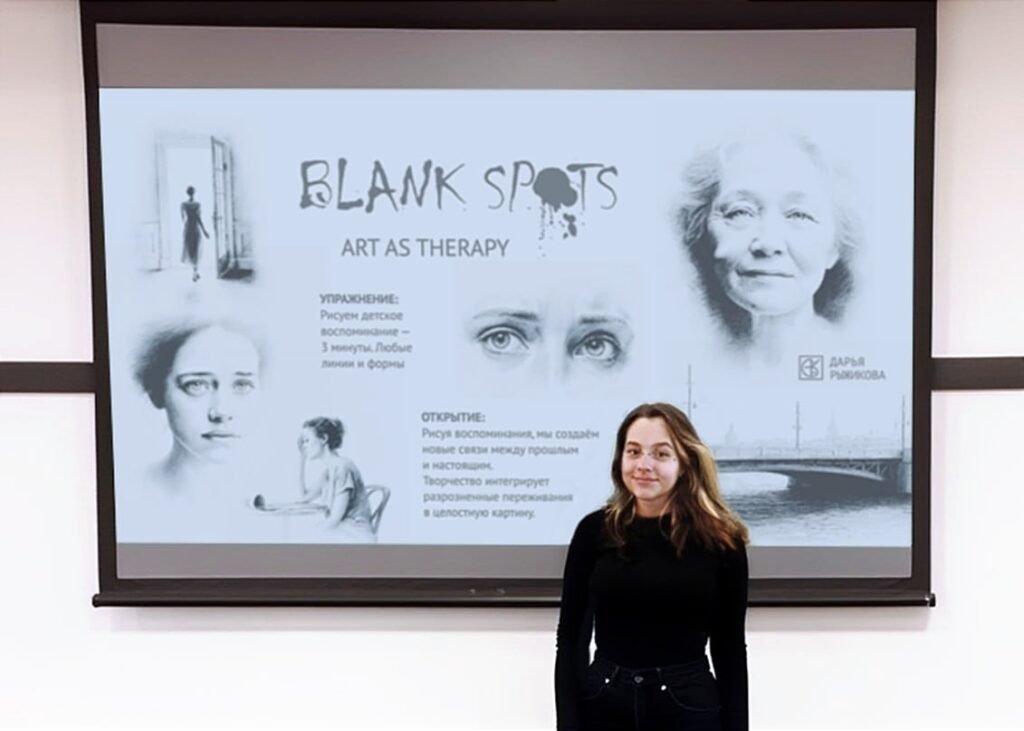
January 2nd changed how I think about Russian audiences. Twenty people gathered at Ibis Hotel for experimental book presentation. Expected polite listening. Got intense engagement instead.
Three-station format worked perfectly. Started in artificial darkness, train sounds filling the room. Read opening scene where Alexei wakes with amnesia. Watched faces change as story hit different people differently.
Art therapy exercise about childhood memories unlocked personal stories. One participant drew grandmother’s kitchen. Another sketched broken bicycle. Connection between creative expression and emotional processing became tangible.
Letters of gratitude exercise surprised me most. People wrote to strangers who helped during difficult periods. Three participants read theirs aloud voluntarily. Room went silent.
Questions focused on neuroscience rather than plot. How does procedural memory survive when episodic memory fails? Can creativity facilitate psychological recovery? Proper academic discussions.
Kaliningrad audience proved more psychologically literate than expected. Mental health conversations happen openly now. 1998 setting resonated because people remembered when therapy meant weakness.
Bridge metaphor sparked longest discussion. Participants identified their symbolic bridges between painful past and uncertain future. Writing felt personal. Presenting in Russia made it universal.
The homecoming succeeded beyond expectations.
Daria Ryzhikova Writer